Understanding Stage Fright (Performance Anxiety) - Shyness and being a musician
Our son (11), while a talented drummer, is notoriously shy. He also suffers from moderate stage fright, that prevents him from doing more with his music. Before entering high school, we are scouring the literature for ways to help him overcome these blockers, and thought we would share our findings with everyone.
As a young musician, the earlier you can get your child performing - even in front of small audiences, or family - the better. This is not so can brag to all your friends about how much better your child is than theirs, but so that your child can learn strategies for overcoming performance anxiety. We have never really forced our children to perform, aside from when the occasional opportunity presented itself. In a large part, the youtube channel we are working on, was to help my son perform - even if in an asynchronous way.
Even if your child has no intention of becoming a professional musician, the same strategies they use to overcome their stage fright and shyness will serve them well throughout their school years, and careers. Think of how much more confident you would be with public speaking (something we all need to do on occasion), if you had been armed from childhood with tangible skills that lessen your anxiety?
**Research suggests that confidence is linked to almost every element involved in a happy and fulfilling life, and that teaching strategies to promote confidence in childhood result in more resilient, successful adults. Preparing your child to either overcome, or reduce their symptoms when faced with performance anxiety, or when placed in a situation with unfamiliar people, is thus one of the most important skills we can teach them. **
Before I could look for strategies that would benefit our son, I needed to learn more about the science of shyness and performance anxiety. I’ve done my best to summarise the key points here.
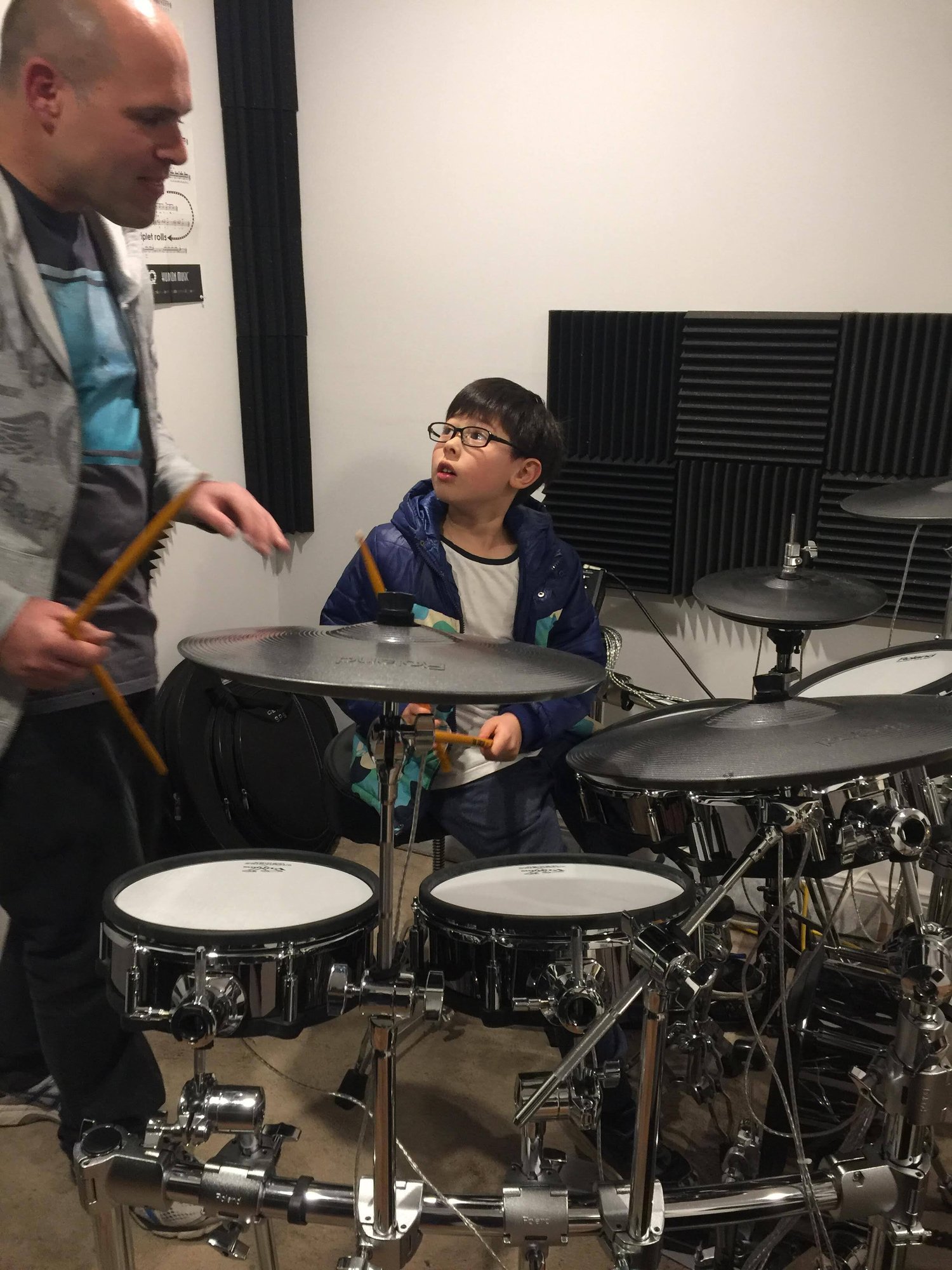
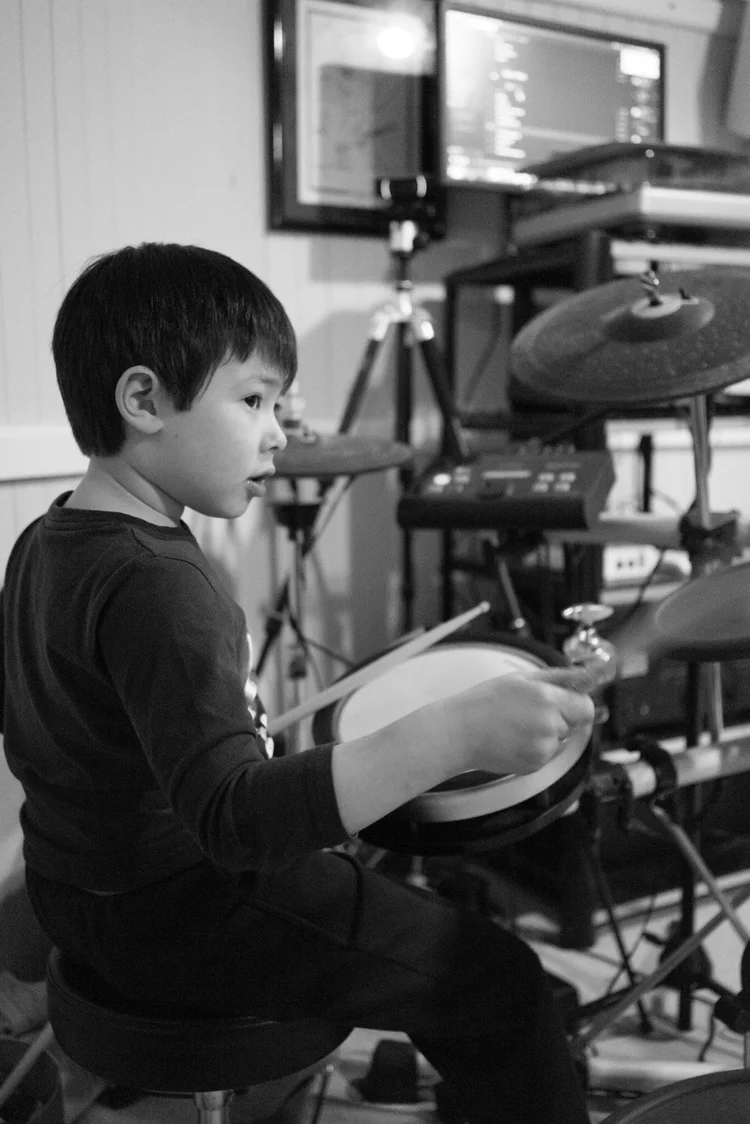
John with his Teacher Troy
The Science of Performance AnxietyPerformance anxiety has been investigated in a variety of contexts including the performing arts (dance, music and acting). Music performance anxiety - or stage fright as most call it - is a complex phenomenon caused by the interaction of many factors, including genetics, environmental stimuli and the individual’s experience, emotions, cognitions and behaviours (Kenny, 2011). It manifests via three elements, independent to varying extents: cognitions, autonomic arousal and behaviours (Kenny, 2005). This is a fancy way of saying there are physical and cognitive symptoms.
Physical symptoms of performance anxiety include an increased heart rate, shakiness and trembling, tense muscles, dry mouth, nausea, and perspiration. These can typically be quantitatively measured, and are oftentimes less impactful than the cognitive symptoms - especially for children.
Cognitive symptoms are typically far harder to control, and for children are the most impactful. These can include shifting moods and feelings, negative self-talk, lack of confidence, and self-doubt.
Who experiences performance anxiety?The reality is that nearly everyone experiences some form of stage fright, shyness, or “performance anxiety” - so you, or your child should never feel alone.
According to a survey of more than 2000 professional musicians conducted by the International Conference of Symphony and Opera Musicians (ICSOM), 24% suffered from stage fright, 13% reported acute anxiety and 17% reported depression. It’s probably pretty obvious that the highest levels of anxiety are generally triggered by solo performances.
In short, ALL ages, genders, races, career stages, and other professions besides music may experience performance anxiety. Performance anxiety is a very personal experience and is often neglected and suppressed - or pushed to the side by parents of young musicians. If there is one thing you can help your child understand, or one lesson from the article you should remember, it is that your child should never feel ALONE and that being anxious about going on stage completely NATURAL.
Why does everyone get stage fright?In a study conducted with over 2000 musicians, there were three causes of performance anxiety that were the most commonly cited. These include ‘‘pressure from self’, ‘excessive arousal’ and ‘inadequate preparation for performance’.
Other studies have similarly divided the causes of performance anxiety into three categories: namely psychological vulnerability, specific anxiety conditioning experiences, and biological basis of anxiety. If none of those make sense to you, no worries. I will dive into each one in turn.
Psychological vulnerabilityHow you were raised and what environment you grew up in significantly impacts your experience on stage. If you yourself are a musician, or even if you are not, take a moment to ask yourself about your childhood. Can you remember what your parents taught you about performing - if anything? How did your parents, or guardians respond to high pressure situations, or stress? - My brother and I have a podcast where we talk about our father a lot - it’s not safe for work, but gives you an insight into why we don’t manage stress well -
Once you have this image, try to think about how they helped to form your identity - and the way you (not your child) respond when required to perform, or speak on stage.
Now think about how and what you are teaching your child about performance, and the stage? Are you even subtly casting a negative image, or even simply demonstrating how not to act under stress? Your children see everything, and I for one am terrible at modelling this behaviour. While I absolutely am forthcoming about my love of performing and speaking on stage, I am known to not be a great example of how to behave under pressure. Lesson Learnt.
Alongside how you were raised and what environment you grew up in, another key contributor to psychological vulnerability are anxiety disorders. I am not going to go into these in any great depth, as I am not in any way qualified to do so.
Your responsibility as a parent of a young performer is not to “cure” anxiety disorders. As a parent it is however, your responsibility to listen to your child and know when something is wrong, or if they are showing symptoms beyond “performance anxiety”. If you suspect that your child may have deeper anxiety related condition - such as depression - then there are many options available to you. In Australia, your first step should be your local general practitioner, or pediatrician. Beyond Blue are also a fantastic organisation, and can help you find ways to talk to your child https://www.beyondblue.org.au/get-support/national-help-lines-and-websites
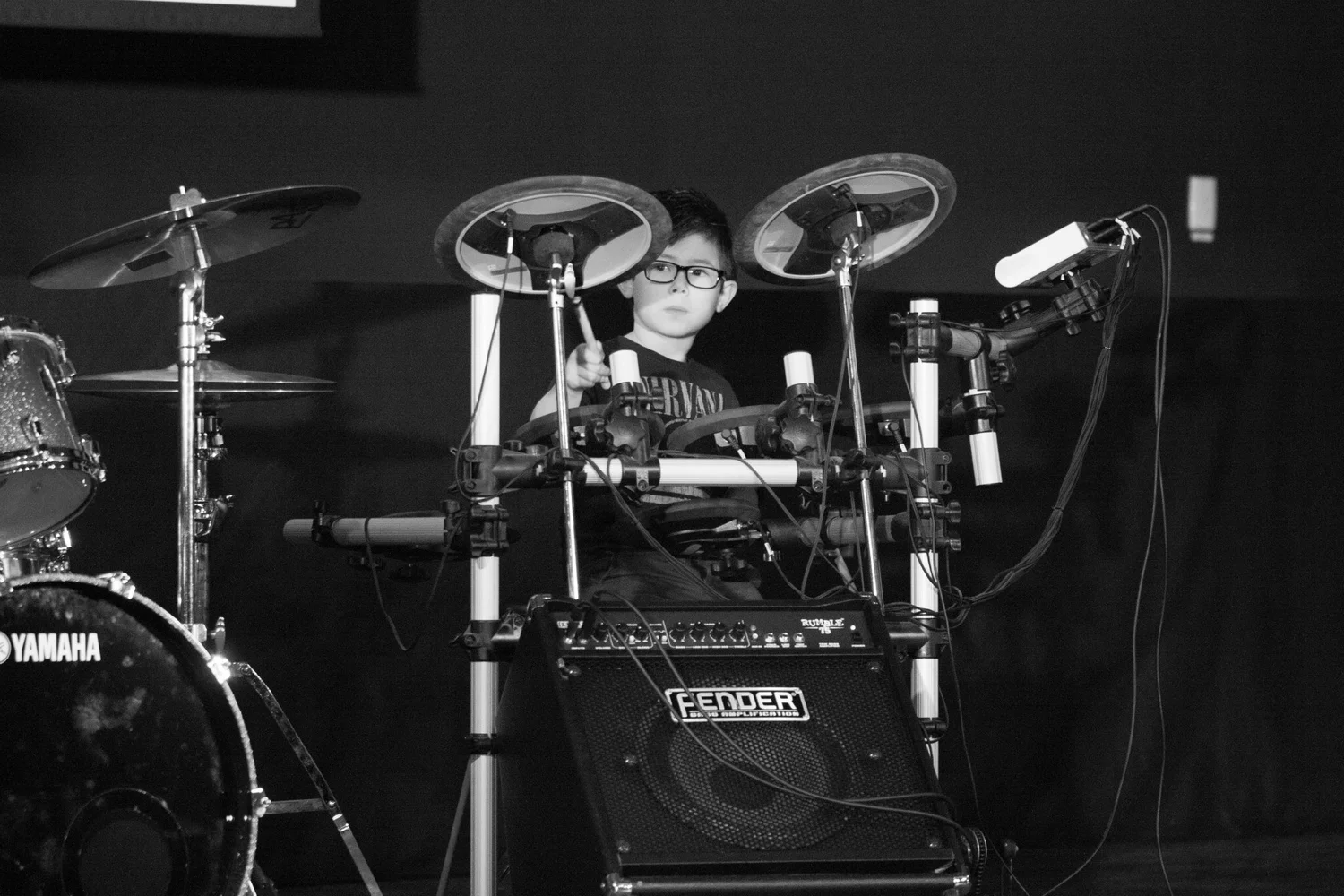
John on stage (age 7)
Specific Anxiety Conditioning Experiences: How do we learn about the stage? In particular, how do we learn that the stage is a place to get nervous? This is a learnt behaviour, as newborn babies would not have an innate awareness of “stage fright” - as they do with heights or loud noises. We learn fear through stimulus and association in a similar way we learn language. This is often called behavioural conditioning in education/psychology. As a linguist by trade, we are now moving into my wheelhouse - so please bear with me if this gets wordy - otherwise feel free to skip a few paragraphs.
To give a very short introduction into behavioural conditioning, we can break the theories into three buckets, or types of conditioning, namely Classical, Observant, and Operant.
In classical conditioning the theorist would describe your child walking on stage, making a mistake, and walking off. The theorist would then state that if your child repeats this process enough times, then the child would learn that a stage is a place where they make mistakes. As such, any time in the future where they are asked to go on stage, they would already be thinking about making mistakes. Your job here as a parent, is to know when your child has made a mistake, and to know when/how to have a discussion with them that does not cause this form of conditioning. Teaching your child visualisation strategies, where they can see a perfect performance, is probably the most impactful here.
Observational conditioning is kind of how it sounds. In this scenario, your child watches a performer who is on-stage ahead of them. This performer then makes a mistake which triggers a cognitive response in your child to think that they will similarly make one. This is harder to catch, especially if you are not with your child during a performance. If your child is truly anxious about performing, and you know that this bothers them, perhaps invest in a good set of headphones and let them tune out during other performances.
Operant conditioning is the one I am most worried about for our son, specifically as he heads into a live audition. In this form of conditioning, your child has prepared well, walks on stage, and feels that they nail it. However, a week later they get a rejection letter. If you repeat this rejection enough times, your child learns that they are NOT good enough. This is the operant way of learning and with enough rejection, even the most confident performers start to doubt themselves. Helping your child develop resilience, and skills to overcome and learn from failure will go a long way in the music biz. They will get rejected, their bands will get turned down, they will likely spend years barely making ends meet - but if they know how to learn from failure, they will be much happier and still in love with music at the end of the road.
Biological Cause of AnxietyThere are three levels of understanding the biological basis of anxiety and these are spoken about quite extensively in the literature, but lesser so in the mainstream. The good news with biological causes of anxiety, is that they are the most effectively managed through mindfulness training, meditation, and visualisation.
Often known as the “fight or flight” response, the biological causes of anxiety can be easily highlighted with an analogy. Let's say a brown snake approached your child. Here in Sydney, that is not an unreali
Keep Reading
How to prepare for an audition or exam
So our son is preparing to audition for a selective high school in year 7. The audition has two parts, an online video submission followed by a second...
Why Young Musicians Should Explore All Genres of Music: Unlocking Creativity and Growth
As a young musician embarks on their musical journey, the world of music can feel vast, diverse, and sometimes overwhelming. With so many genres, styles,...
The Importance of Technique and Posture for Young Drummers: Building a Solid Foundation
When a child begins learning the drums, it’s easy to get caught up in the excitement of playing their favorite songs or mastering complicated rhythms....
Stay in the Loop
Get new posts delivered to your inbox. Tips, gear advice, and everything we learn about raising a little drummer.
No spam, unsubscribe anytime.